Author name: manprit01

Blog

TaekwondoPoomsae

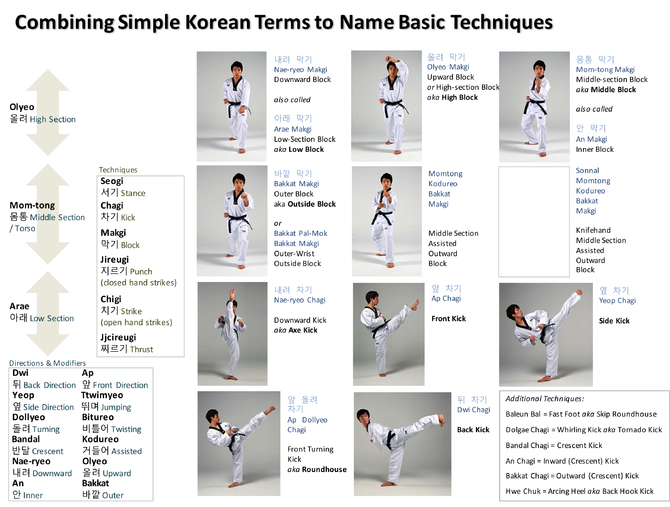
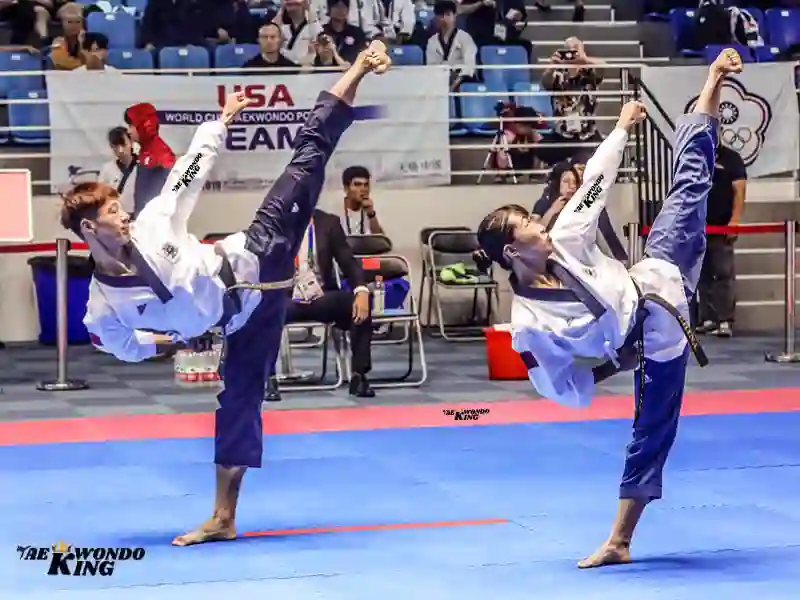
Taekwondo Poomsae (품새) are formal patterns of Taekwondo techniques consisting of blocks, strikes, stances, kicks, and movements performed in a fixed sequence. They represent a fight against imaginary opponents and are used to develop technique, balance, coordination, power, breathing control, and focus. (ilgitaekwondo.org) Main types of Kukkiwon/WT Poomsae 1. Taegeuk Poomsae (태극 품새) – Color Belt Forms Taegeuk forms are the foundation forms learned before black belt. There are 8 Taegeuk Poomsae: Taegeuk Il Jang (1) Taegeuk Yi Jang (2) Taegeuk Sam Jang (3) Taegeuk Sa Jang (4) Taegeuk Oh Jang (5) Taegeuk Yuk Jang (6) Taegeuk Chil Jang (7) Taegeuk Pal Jang (8) (taekwondo.fandom.com) 2. Yudanja Poomsae (Black Belt Forms) These are advanced forms for Dan (black belt) ranks, including: Koryo Keumgang Taebaek Pyongwon Sipjin Jitae Chonkwon Hansu Ilyeo (globalmartialarts.university) Purpose of practicing Poomsae Improve correct technique and body mechanics Build speed, strength, and accuracy Practice transitions between movements Develop mental discipline and concentration Prepare for belt examinations and competitions (ilgitaekwondo.org) If you mean Taekwondo Poomsae list by belt level, Poomsae competition rules, or step-by-step movements of a specific Poomsae (e.g., Taegeuk 1 Jang), I can provide that too. Here is a more detailed explanation of Taekwondo Poomsae (품새), including history, structure, meanings, and training methods. What is Poomsae? Poomsae is a structured sequence of Taekwondo movements performed according to a fixed pattern. Each movement represents a defensive or offensive technique against imaginary opponents. The word is often explained as: Poom (품) – form, shape, or quality of technique Sae (새) – appearance, style, or arrangement Poomsae combines physical skill with mental discipline. A good performance requires correct technique, timing, balance, power, breathing, and concentration. Structure of a Poomsae A Poomsae usually contains: 1. Stances (Seogi) Examples: Ap Seogi – Walking stance Ap Kubi – Front stance Dwit Kubi – Back stance Juchum Seogi – Horse stance Beom Seogi – Tiger stance Correct stance provides stability and allows powerful techniques. 2. Blocks (Makgi) Examples: Arae Makgi – Low block Momtong Makgi – Middle block Eolgul Makgi – High block Sonnal Makgi – Knife-hand block 3. Strikes and Punches Examples: Momtong Jireugi – Middle punch Eolgul Jireugi – High punch Sonnal Chigi – Knife-hand strike 4. Kicks (Chagi) Examples: Ap Chagi – Front kick Dollyo Chagi – Roundhouse kick Yop Chagi – Side kick Taegeuk Poomsae (Color Belt Forms) The eight Taegeuk forms represent the eight trigrams (Palgwae) from traditional Korean philosophy. Each form increases in difficulty. Taegeuk Il Jang (1st Form) Symbol: ☰ Heaven (Keon) Focus: Basic stances Basic blocks Straight punches Meaning: Beginning, creation, and the start of learning. Taegeuk Yi Jang (2nd Form) Symbol: ☱ Lake (Tae) Focus: Better balance More coordinated movements Introduction of kicking techniques Taegeuk Sam Jang (3rd Form) Symbol: ☲ Fire (Ri) Focus: Stronger attacks Knife-hand techniques Faster combinations Taegeuk Sa Jang (4th Form) Symbol: ☳ Thunder (Jin) Focus: Back stance Knife-hand blocks More complex transitions Taegeuk Oh Jang (5th Form) Symbol: ☴ Wind (Son) Focus: Strong movements Side kicks Controlled power Taegeuk Yuk Jang (6th Form) Symbol: ☵ Water (Gam) Focus: Advanced footwork Balance after kicks Smooth movement Taegeuk Chil Jang (7th Form) Symbol: ☶ Mountain (Gan) Focus: More advanced stances Precision and control Taegeuk Pal Jang (8th Form) Symbol: ☷ Earth (Gon) Focus: Preparation for black belt Combining all previous skills Black Belt Poomsae Koryo (고려) Represents the spirit of the Korean dynasty of the same name. Focus: Strong techniques Confidence Warrior spirit Keumgang (금강) Means “diamond” or something strong and unbreakable. Focus: Power Stability Mountain-like strength Taebaek (태백) Named after a sacred Korean mountain. Focus: Precision Clear and powerful movements Pyongwon (평원) Represents a wide, peaceful plain. Focus: Calmness Balance Control Sipjin (십진) Based on the idea of longevity and the decimal system. Focus: Stability Advanced techniques Jitae (지태) Represents earth and the connection between humans and nature. Chonkwon (천권) Represents the sky and great energy. Hansu (한수) Represents water and adaptability. Ilyeo (일여) Represents unity of mind, body, and spirit. Poomsae Competition Scoring In official competitions, judges generally evaluate: Accuracy Correct stances Correct techniques Correct sequence Presentation Power Speed Rhythm Balance Expression of energy Important performance points: Start and finish at the same position Maintain correct breathing Avoid unnecessary movement Show confidence and control How to Practice Poomsae Better Learn the pattern slowly first Accuracy comes before speed. Practice each movement separately Perfect blocks, punches, and stances individually. Use correct breathing Exhale during powerful techniques. Focus on transition Moving between techniques smoothly improves the overall performance. Train both sides Develop equal strength and coordination. Practice with intention Imagine real opponents and apply each technique with purpose. Poomsae is not only a memory exercise; it is a way to develop technical skill, discipline, confidence, and martial awareness in Taekwondo.
Blog

motivation

🥋 Taekwondo Motivation Every kick begins with a decision to try. Every punch is built through discipline. Every belt is earned through patience, sweat, and determination. Taekwondo is not just about defeating an opponent — it is about defeating your own limits. Train your body, sharpen your mind, and strengthen your spirit. Fall down. Get up. Practice again. The journey from white belt to black belt is a journey of growth. 🥋 Keep training. Keep improving. Never give up. If you want, I can also make it more powerful like a martial arts speech, short for an Instagram caption, or for a Taekwondo competition. Here are more Taekwondo motivation lines: 🥋 Taekwondo is a journey, not a destination. The belt around your waist shows your rank, but the discipline in your heart shows your true strength. Train when you are tired. Practice when it feels difficult. Push yourself when others stop. Every bruise teaches you. Every mistake improves you. Every challenge makes you stronger. A true martial artist does not fear failure — they use it as a lesson. 🔥 Strong body. Calm mind. Unbreakable spirit. Keep kicking. Keep growing. Keep fighting. 🥋 Champions are not created on competition day. They are created in the early mornings, in the extra practice, in the moments when nobody is watching. A powerful kick comes from thousands of repetitions. A black belt comes from years of patience. Respect your opponents. Respect your coaches. Respect the journey. Your greatest fight is always against the person you were yesterday. ⚡ Train hard. Stay humble. Become better. 🥋 The Taekwondo mindset: No excuses. No shortcuts. No giving up. A warrior’s strength is not only in their kicks and punches — it is in their discipline, courage, and determination. One more round. One more practice. One more step toward your goal. The journey may be hard, but the results are worth it. 🔥 Oss! Keep moving forward. I can also make 100 short Taekwondo quotes, black belt motivation, or competition-winning speech style lines.

Blog

Discipline

Self-Control (Guk Gi): Stay calm under pressure and control your emotions and actions. Self-control in Taekwondo means mastering yourself before trying to master any technique. It is the ability to remain calm, think clearly, and make good decisions even in difficult situations. What self-control looks like in Taekwondo Staying calm during sparring instead of reacting with anger. Accepting corrections from your instructor without frustration. Respecting your opponent, whether you win or lose. Using only the amount of force that is necessary during training. Avoiding fights outside the dojang whenever possible. Why it matters A skilled martial artist is not the one who loses control in a tense moment, but the one who stays composed. Self-control helps prevent injuries, builds trust with training partners, and reflects true confidence. In everyday life Self-control also means: Thinking before speaking. Managing stress without lashing out. Resisting distractions to stay focused on your goals. Making responsible choices even when no one is watching. “The strongest person is not the one who can defeat others, but the one who can control themselves.” In Taekwondo, self-control (Guk Gi) is the bridge between physical skill and good character. It teaches that true strength comes from mastering your emotions, words, and actions. Respecting Rules: Bowing, Showing Courtesy, and Following Dojang Etiquette Respecting rules is a fundamental principle of Taekwondo. It teaches students to value discipline, humility, and consideration for others. Following the rules creates a safe, focused, and respectful training environment. What it means in Taekwondo Bowing: Bow to your instructor, training partners, and the dojang as a sign of respect and gratitude. Showing courtesy: Speak politely, listen attentively, and treat everyone with kindness regardless of rank. Following dojang etiquette: Arrive on time, wear a clean uniform, keep the training area tidy, and follow the instructor’s directions without interruption. Respecting rank: Acknowledge the experience of senior belts while encouraging junior students. Why it matters Respect for rules builds discipline, strengthens character, and helps everyone train safely and effectively. It also reminds students that martial arts are about personal growth, not just physical techniques. In everyday life The same principle applies outside the dojang: Respect your teachers, parents, and peers. Follow rules at school, work, and in public places. Be punctual, responsible, and considerate of others. Show good manners and act with integrity. “Respect for rules is respect for yourself, your instructor, your training partners, and the values of Taekwondo.” Maintaining Focus: Giving Full Attention During Drills Instead of Getting Distracted Maintaining focus is an essential part of Taekwondo. It means directing your complete attention to the task at hand, staying mentally present, and avoiding distractions. Focus helps students learn techniques correctly, improve performance, and train safely. What it means in Taekwondo Pay close attention to your instructor’s demonstrations and instructions. Concentrate on each movement, technique, and stance during practice. Stay engaged during drills instead of looking around or talking with others. Keep your mind on your training goals rather than outside distractions. Remain alert and aware during sparring to react effectively and safely. Why it matters A focused student learns faster, performs techniques with greater accuracy, and reduces the risk of injury. Focus also builds confidence because consistent attention leads to continuous improvement. In everyday life Maintaining focus helps you: Study more effectively. Complete tasks without unnecessary distractions. Listen carefully when others are speaking. Make better decisions under pressure. Achieve long-term goals through consistent effort. “Where your focus goes, your improvement follows.” In Taekwondo, focus is more than paying attention—it is training your mind to stay present, disciplined, and committed to becoming better every day.

Blog

MartialArts

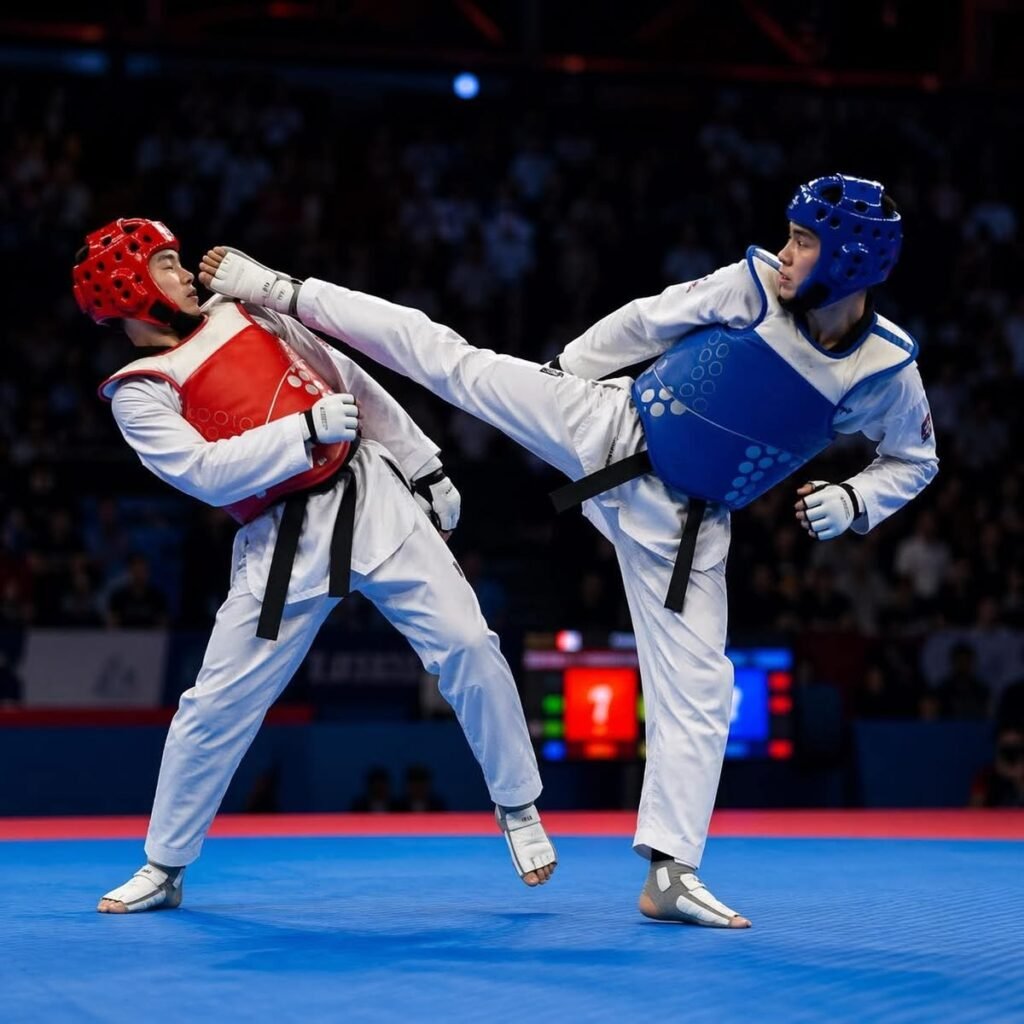
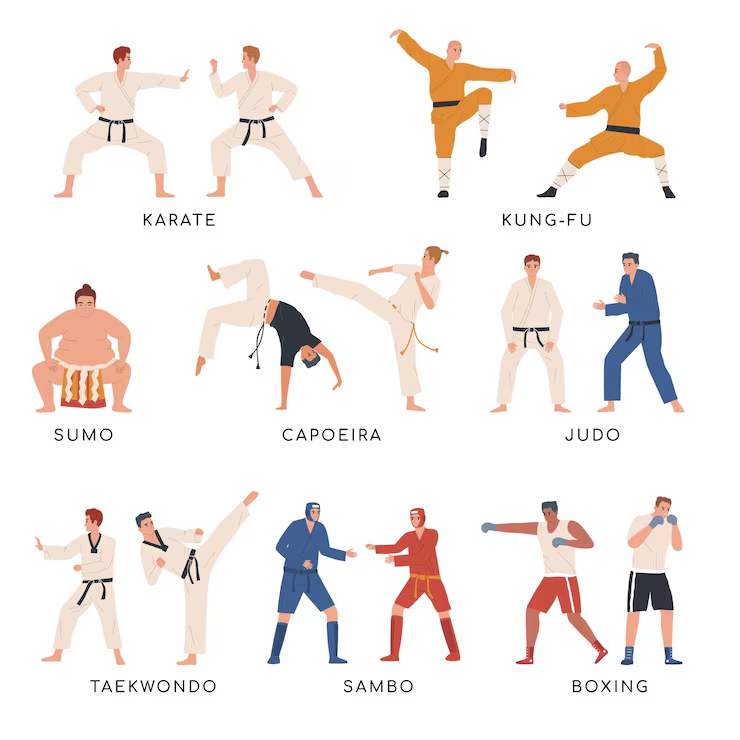
Martial arts are codified combat systems practiced worldwide for self-defense, sport, fitness, and spiritual growth, ranging from striking styles like karate and taekwondo to grappling arts like judo and Brazilian jiu-jitsu. They originated in ancient cultures, especially East Asia, but today include global traditions and modern hybrids like MMA. 🥋 Origins & History East Asia: Chinese kung fu (over 5,000 years old), Japanese judo, karate, aikido, Korean taekwondo. South Asia: Indian Kalaripayattu, one of the oldest martial arts. Europe: Medieval fencing, boxing, wrestling traditions. Modern hybrids: Mixed Martial Arts (MMA) blends striking and grappling from multiple systems. ⚔️ Categories of Martial Arts Armed arts: Swordsmanship, archery, staff fighting. Unarmed arts: Striking: Karate, Taekwondo, Muay Thai, Kickboxing. Grappling: Judo, Wrestling, Brazilian Jiu-Jitsu, Aikido. Hybrid: MMA, Hapkido, Sambo. 🌿 Philosophical & Spiritual Dimensions Influenced by Daoism and Zen Buddhism, emphasizing mental clarity and unity of mind-body. Many arts (like Tai Chi) are practiced for health and meditation rather than combat. 🏅 Martial Arts in Sports Olympics: Judo (since 1964) and Taekwondo (since 2000) are full medal sports. Competitive formats: Point-based sparring (karate, taekwondo), submission grappling (BJJ, judo), full-contact fighting (MMA, Muay Thai). 📊 Comparison Table Style Focus Origin Modern Use Karate Striking (hands/feet) Japan Sport, self-defense Taekwondo High kicks, speed Korea Olympic sport, self-defense Judo Throws, grappling Japan Olympic sport, self-defense Kung Fu Diverse strikes/forms China Tradition, fitness Muay Thai Elbows, knees, clinch Thailand Combat sport Brazilian Jiu-Jitsu Ground fighting, submissions Brazil MMA, self-defense Kalaripayattu Strikes, weapons India Tradition, fitness MMA Hybrid striking/grappling Global Sport, entertainment 🚨 Risks & Considerations Injury risk: High in full-contact arts (Muay Thai, MMA). Philosophy loss: Modern commercialization sometimes strips spiritual depth. Legal awareness: Self-defense applications must align with local laws. Would you like me to dive deeper into Indian martial arts like Kalaripayattu, or compare Olympic martial arts such as judo vs taekwondo? Taekwondo is a Korean martial art that emphasizes powerful kicks, fast footwork, and disciplined training. It’s both a traditional practice rooted in philosophy and a modern Olympic sport. 🥋 Core Features of Taekwondo High kicks: Famous for dynamic head-height and spinning kicks. Forms (Poomsae): Pre-arranged sequences of movements that build technique and discipline. Sparring: Competitive fighting under strict rules, often point-based. Self-defense: Practical applications against grabs, strikes, and real-world threats. Philosophy: Courtesy, integrity, perseverance, self-control, and indomitable spirit. ⚔️ Taekwondo in Martial Arts Context Striking focus: Unlike judo or BJJ, taekwondo relies heavily on kicks and punches. Olympic sport: Official medal event since Sydney 2000. Global reach: Practiced in over 200 countries, making it one of the most widespread martial arts. Comparison: Karate emphasizes hand strikes, while taekwondo prioritizes leg techniques. 🌟 Benefits of Practicing Taekwondo Fitness: Improves strength, flexibility, and endurance. Confidence: Builds self-esteem through achievement. Discipline: Encourages respect and focus in daily life. Community: Connects practitioners worldwide through shared values. Would you like me to expand into a step-by-step beginner’s guide for starting taekwondo training, or a comparison with other martial arts to see how it stacks up against karate, judo, and kung fu?

Blog

BlackBelt

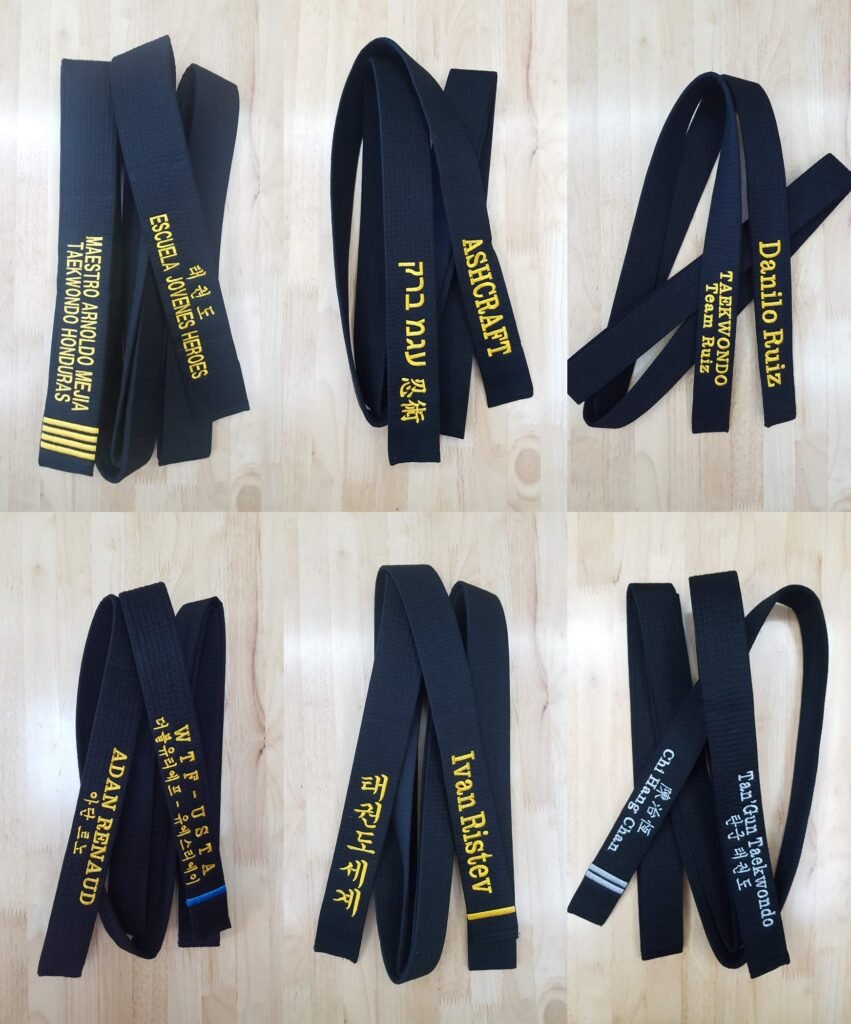
In Taekwondo, the Black Belt is one of the most recognized symbols of achievement. It represents not only technical skill but also maturity, discipline, and responsibility. 🥋 Symbolism of the Black Belt Mastery of basics: You’ve internalized fundamental kicks, blocks, and forms. Commitment: Years of consistent training and perseverance. Responsibility: Expected to guide and mentor junior students. New beginning: Seen as the start of advanced study, not the end. 📈 Black Belt Levels (Dan Ranks) 1st Dan: Entry-level black belt, proving mastery of fundamentals. 2nd–3rd Dan: Deeper technical refinement and teaching responsibilities. 4th–6th Dan: Advanced mastery, often instructors or masters. 7th–9th Dan: Grandmasters, recognized for lifelong dedication. 10th Dan: Rarely awarded, often honorary for extraordinary contribution. 🌟 Philosophical Meaning The black belt embodies the five tenets of Taekwondo: Courtesy Integrity Perseverance Self-control Indomitable spirit 🔑 Key Insight Rather than being a finish line, the black belt is a gateway to lifelong learning. Many practitioners say that only after earning it do they truly begin to understand Taekwondo’s depth. Would you like me to expand on the testing requirements for earning a black belt, or explore the philosophical journey behind advancing through dan ranks? In Taekwondo, black belt names usually refer to the dan ranks (levels) that distinguish practitioners who have advanced beyond the beginner stages. Each level has its own title and significance. 🥋 Black Belt Dan Levels 1st Dan – Il Dan: Entry-level black belt, mastery of fundamentals. 2nd Dan – I Dan: Refinement of techniques, beginning teaching responsibilities. 3rd Dan – Sam Dan: Advanced skills, deeper understanding of forms and sparring. 4th Dan – Sa Dan: Recognized as a master instructor. 5th Dan – Oh Dan: High-level mastery, leadership in dojang. 6th Dan – Yuk Dan: Senior master rank, often overseeing schools. 7th Dan – Chil Dan: Grandmaster status begins here. 8th Dan – Pal Dan: Senior grandmaster, recognized internationally. 9th Dan – Gu Dan: Highest active rank, reserved for lifelong dedication. 10th Dan – Ship Dan: Rarely awarded, often honorary for extraordinary contribution. 🌟 Meaning Behind the Names The numbers (Il, I, Sam, Sa, Oh, Yuk, Chil, Pal, Gu, Ship) are Korean numerals. Each dan rank reflects not just technical ability but also philosophical growth and responsibility. Higher dans are often associated with teaching, mentoring, and spreading Taekwondo globally. Would you like me to create a visual chart of these black belt names and levels, or a step-by-step journey guide showing how practitioners progress through them?

Blog

0

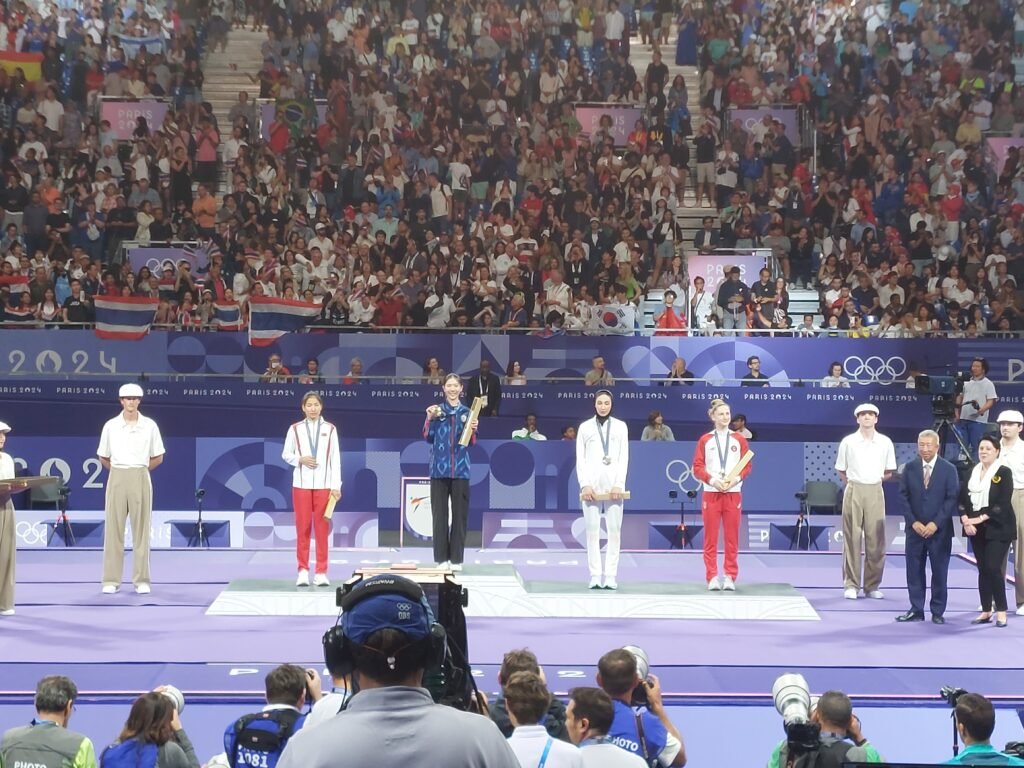
Taekwondo became an official Olympic medal sport at the Sydney 2000 Games, after first appearing as a demonstration in Seoul 1988 and Barcelona 1992. Since then, it has been contested at every Summer Olympics, with South Korea dominating the medal table. 🏅 Olympic History of Taekwondo Seoul 1988: First demonstration sport, showcased by hundreds of practitioners. Barcelona 1992: Second demonstration appearance. Sydney 2000: Became an official medal sport. Tokyo 2020: Continued with 8 events (4 men, 4 women). Paris 2024: South Korea remained the top nation with 6 golds. ⚖️ Competition Format Events: 8 (4 men’s weight categories, 4 women’s). Structure: Single-elimination tournament with repechage for bronze. Match Rules: 3 rounds of 2 minutes each. Points scored via electronic sensors in protective gear (torso/head). Valid strikes: punches with knuckles, kicks below the ankle bone. Extra points for spinning/turning kicks. 🌍 Global Impact Dominant Nation: South Korea (14 golds, 25 total medals). Other Strong Nations: China (7 golds), USA (11 medals), Iran (10 medals). Notable Athletes: Steven Lopez (USA) – 2 golds, 1 bronze. Hadi Saei (Iran) – 2 golds, 1 bronze. Panipak Wongpattanakit (Thailand) – multiple medals. 🔑 Key Differences from Other Martial Arts Taekwondo vs Karate: Taekwondo emphasizes dynamic footwork and high kicks, while karate relies more on hand strikes. Olympic Style: Overseen by World Taekwondo (WT), focusing on Kukkiwon-defined techniques. 📊 Medal Table Snapshot (as of Paris 2024) Nation Gold Silver Bronze Total South Korea 14 3 8 25 China 7 2 4 13 USA 3 2 6 11 Iran 3 3 4 10 Great Britain 2 4 4 10 Would you like me to break down India’s performance in Olympic taekwondo so far, or highlight the Paris 2024 medal winners in detail?

Blog

SelfDefense

Taekwondo is highly effective for self-defense because it emphasizes speed, precision, and maintaining distance, with practical techniques like front kicks, side kicks, and escapes from grabs that help neutralize threats quickly. It also integrates awareness, blocking, and situational control, making it a versatile system for real-world safety. 🥋 Core Principles of Taekwondo Self-Defense Speed over strength: Quick strikes create openings and allow escape. Targeting vulnerable areas: Eyes, throat, groin, knees, and ribs are effective points. Control and distance: Staying out of reach while striking keeps you safer. Situational awareness: Prevents most attacks before they escalate. ⚡ Essential Techniques Front Kick (Ap Chagi): Direct, fast, ideal for creating space. Roundhouse Kick (Dollyo Chagi): Powerful side impact, effective on ribs or thighs. Side Kick (Yop Chagi): Strong defensive kick to maintain distance. Low Block (Arae Makgi): Deflects incoming strikes. Arm-Grab Escapes: Rotate against the thumb grip and counterstrike. Bear-Hug Counters: Knee strikes and hip twists to break free. Palm Strikes & Wrist Releases: Quick strikes followed by freeing the wrist. Pressure-point targeting: Disrupts attacker’s control instantly. 🛡️ Training Methods Partner drills: Simulate realistic grabs and strikes. Scenario-based training: Practice responses to different attack situations. Ground defense: Escapes and kicks to regain control when downed. Use of everyday items: Keys, pens, or chairs as defensive tools. 🚨 Risks & Considerations Over-reliance on kicks: High kicks may be risky in close quarters; balance with hand strikes. Need for regular practice: Muscle memory is critical; 15 minutes daily can drastically improve effectiveness. Legal awareness: Self-defense laws vary; use only necessary force to escape danger. Would you like me to build a step-by-step routine for practicing these techniques at home, or a real-world scenario guide showing how to apply them in everyday situations?

Blog

MindBody

The MindBody concept in taekwondo is all about the harmony between physical training and mental discipline. It emphasizes that true martial arts mastery isn’t just about powerful kicks or strong stances — it’s equally about focus, emotional control, and inner balance. 🌿 Key Elements of MindBody in Taekwondo Mental focus: Concentration during forms and sparring sharpens awareness. Emotional discipline: Staying calm under pressure builds resilience. Physical conditioning: Strength, flexibility, and endurance support mental clarity. Breath control: Proper breathing enhances energy flow and reduces stress. Philosophy: Respect, integrity, and perseverance tie the body’s actions to the mind’s values. This integration is why taekwondo is often described as a way of life rather than just a sport. It teaches practitioners to carry discipline, respect, and mindfulness beyond the dojang into everyday life. Would you like me to expand this into a training routine that blends physical drills with mindfulness practices, or into a philosophical guide exploring the deeper meaning of the mind-body connection? Expanding on the MindBody principle in taekwondo, let’s go deeper into how practitioners cultivate this balance and why it’s so central to martial arts. 🧘 Mental Dimensions Meditation: Short sessions before or after training help calm the mind and sharpen focus. Visualization: Imagining techniques or sparring scenarios strengthens confidence and performance. Mindfulness: Staying present during drills reduces distractions and improves reaction time. 💪 Physical Dimensions Strength training: Builds resilience and supports precise movements. Flexibility drills: Essential for high kicks and injury prevention. Breathing techniques: Synchronizing breath with strikes maximizes power and control. 🌟 Philosophical Dimensions Do (the “way”): Taekwondo isn’t just combat—it’s a lifestyle of respect, humility, and perseverance. Balance: Harmony between aggression and restraint, effort and recovery. Self-awareness: Understanding one’s limits and strengths leads to growth. This holistic approach is why taekwondo practitioners often describe training as a journey toward inner peace and outer strength. Would you like me to illustrate this with a daily routine that blends meditation, drills, and philosophy, or with a historical perspective showing how the mind-body connection evolved in martial arts traditions?

Blog

kicks

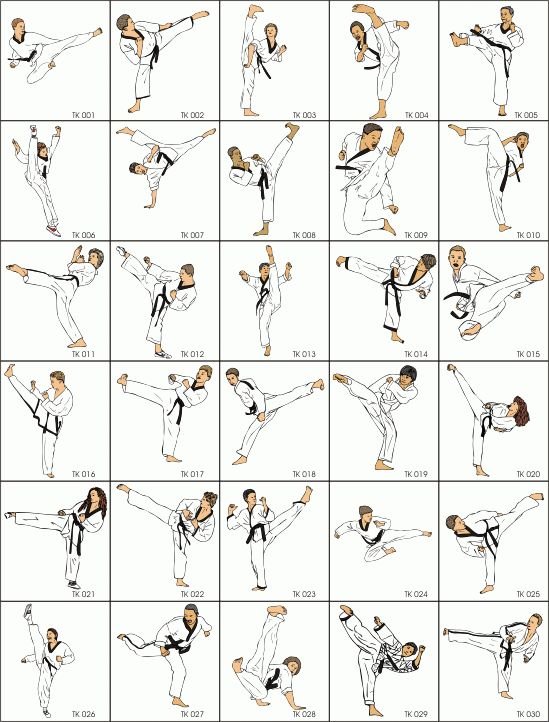
Perfect — you’ve listed some of the most fundamental and visually striking taekwondo kicks. Let’s break them down with technique and purpose: 🥋 Key Taekwondo Kicks Front Kick (Ap Chagi) Executed by lifting the knee and snapping the foot forward. Targets: torso or chin. Known for speed and simplicity. Side Kick (Yeop Chagi) Chamber the knee across the body, extend the leg sideways using the heel. Targets: ribs, midsection, or head. Famous for its raw power and board-breaking ability. Jumping Kick Any kick performed while airborne, adding explosive force. Targets: head or chest. Used in demonstrations and advanced sparring. Hook Kick (Huryeo Chagi) Swing the leg outward then hook inward with the heel. Targets: head or jawline. Effective for surprise attacks and knockouts. Back Kick (Dwi Chagi) Turn slightly, thrust the heel straight back. Targets: stomach or chest. Powerful counterattack, often used when an opponent rushes in. Each of these kicks has its own tactical use — front kicks for speed, side kicks for power, jumping kicks for flair, hook kicks for precision, and back kicks for counters. Would you like me to create a training drill set that combines these kicks into a practice routine, or a competition strategy guide showing when to use each kick effectively?

Blog

taekwondo

Got it — when you say “taekwondo post,” do you mean you’d like me to draft a social media post about taekwondo (for Instagram, Facebook, LinkedIn, etc.), or are you looking for a blog-style write‑up summarizing an event like the World Championships? For example, here’s a quick Instagram‑style post idea about the 2025 World Taekwondo Championships: ✨🥋 Victory in Wuxi! The 2025 World Taekwondo Championships brought together 853 athletes from 145 nations. Turkey shined with 3 gold medals, while South Korea dominated the men’s divisions. Brazil and Tunisia also made history with standout performances. 🌍🔥 💥 Highlights: Emine Göğebakan (Turkey) – Women’s -46kg Gold Kang Sang-hyun (South Korea) – Men’s +87kg Gold Maria Clara Pacheco (Brazil) – Women’s -57kg Gold Wafa Masghouni (Tunisia) – Women’s -62kg Gold #Taekwondo #WorldChampionships #MartialArts #Wuxi2025 Would you like me to shape this into a social media caption, a blog article, or a short news-style update?

Shopping Cart
Scroll to Top